With age comes great wisdom is the old saying. You hear is growing up and easily dismiss it as nonsense old people spout to hush children. Then suddenly you are the old person uttering the phrase and you understand what was meant all those years and reprimands ago.
Growing up, there wasn’t this never-ending generational division and talk between people. Today, there are the usual complaints about “you cannot understand, you’re old” but it has gone beyond that unfortunately. There is now some weird obsession on generational labels and hurling accusations based solely on when a person was born.
Let’s talk about the living generations, their traits, how their children were raised, and what we can learn from the past to guide the future.
The Silent Generation
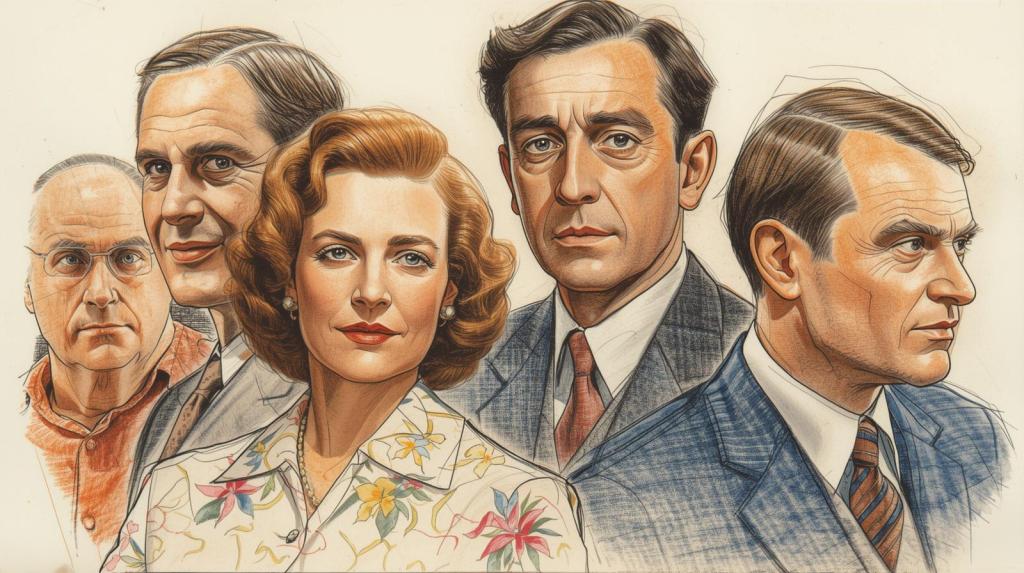
The current “forgotten” generation is The Silent Generation (1928-1945). My father belongs to this generation, though born into the waning years thereof. These are the children that grew up during The Great Depression. They watched their families struggle to earn a paycheck, feed their families, and then watched families members go off to fight in World War II.
These are quiet, frugal, hardworking individuals who struggled and fought to survive.
The Baby Boomers

The, currently, most maligned generation and the one my mother was born into (1946-1964). These children were raised by frugal parents who remember the struggles of The Great Depression and wanted a better life for their children. This generation is easily characterized by their happy dispositions and their drive to attain and maintain financial security.
Raised by veterans, these are the young people who fought in Korean and then Vietnam. There are currently over 60 million “boomers” alive and they are living longer than any previous generation.
They raised their children to be responsible but as the 1950’s turned into the 1960’s, those children watched a President be assassinated, they went to war themselves, and then became fully involved in the hippie, “free love”, “make war, not peace” escapades of the late 1960’s and well into the mid-1970’s. It is reflected in the majority of the children they raised.
Gen X
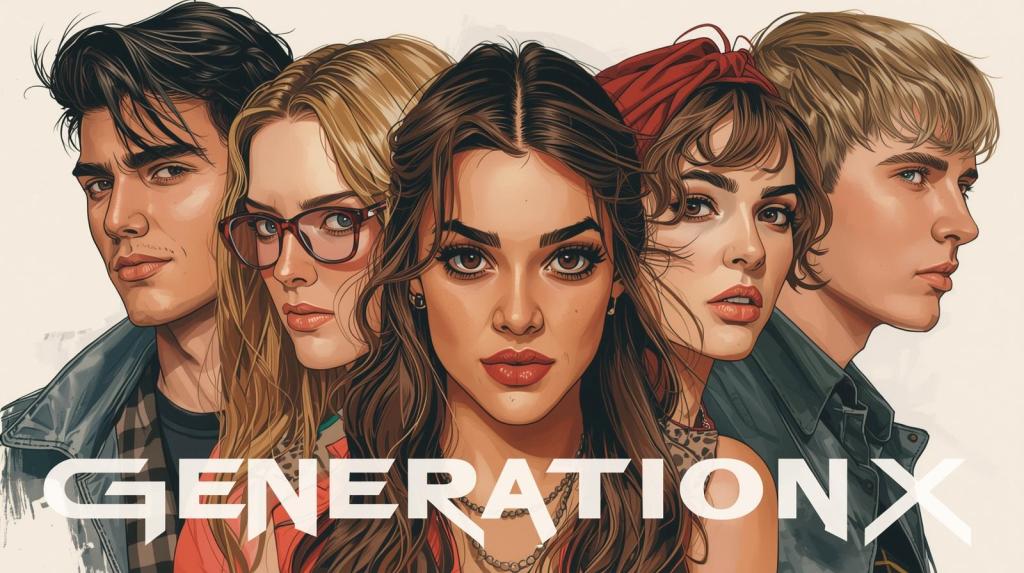
Ahhh, my generation (1965-1980) is often overlooked, and we are more than fine with that! Raised by parents who were more interested in themselves than their children, we raised ourselves. First true, modern, generation that saw both parents work outside the home, ever increasing divorce rates, the decline of the traditional two-parent family structure are but a few characterizations of this generation.
Another way to character this generation, is feral. We do not care about what you think about us. We do not care about your feelings, and we rarely give a second thought to what others think about our opinions. Leave us alone and we are more than happy to leave you alone.
We are the first true generation that began to have children at ever increasing ages. Then you get to how we raised our children. We were so feral and self-reliant as children, we turned into the exact opposite as parents. We became the poster child for helicopter parents, raising children incapable of making decisions for themselves. Children who routinely and regularly took their parents on job interviews. These children turned into fragile adults, whose feelings are hurt at the drop of a hat, whose self-esteem is subject to the wind, and unfortunately, children who cannot make decisions for themselves.
Millennial Generation
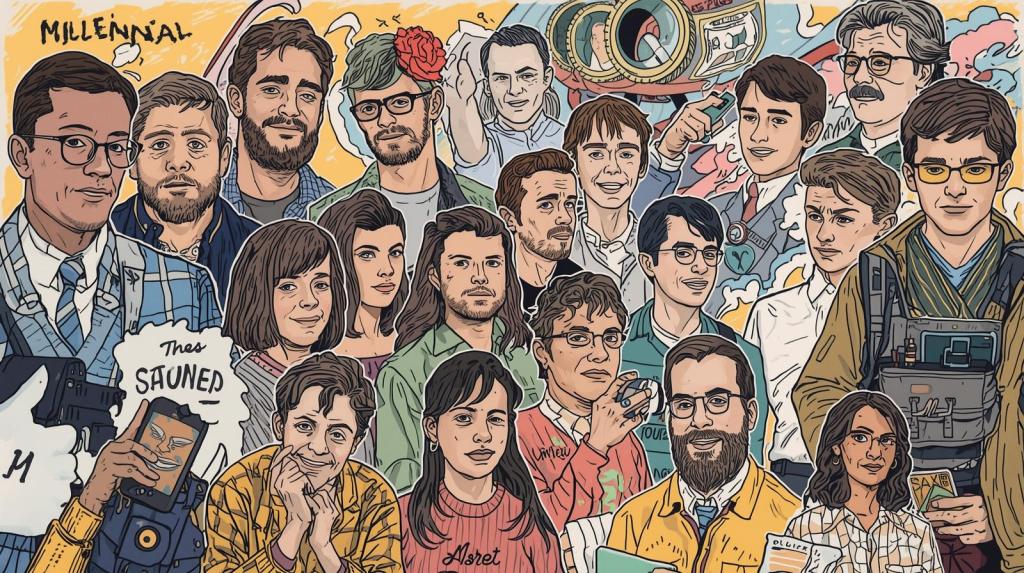
Ahh the first wave of children from the feral generation, Millennials (1981-1996). The first generation to live under the rise of the home computer and the internet.
The generation that came of age in a post-9/11 world and went to war in Iraq and Afghanistan. The generation caught between aging boomers and middle-aged Gen X still dominating corporate America. T
The beginning of the narcissist generations raised by Gen X. The results of helicopter parenting can be seen their intensive focus on self. The generation that needed “safe spaces” to retreat from ideas and opinions that challenged or differed from their own. The generation that began the obsessive love affair with the rise of social media.
Raised by helicopter parents, they are hesitant and reluctant to do much of anything without a consensus of opinion. The parents of Gen Z and Gen Alpha, their lives are intertwined with computer technology as no generation before.
Gen Z

The last generation raised by Gen X and the first generation raised by Millennials, Gen Z (1997-2012) is the first generation to be raised with modern computer technology fully integrated into their lives.
The generation that can best be summarized as fueled by activism. Growing up attached to the internet, they have continued the need for consensus that characterized Millennials. The intolerance that began with the “space spaces” of the Millennials has gone even further with this generation, every difference of opinion or thought is taken as a personal attack.
Raised with the economic struggles of their parents, in a post-9/11 world, the quiet silencing of free speech, and a worldwide pandemic, this is the generation that, from the outside looking in, appears to be perpetually angry and intolerant. Screeching, at anything and everyone, seems to be their dominate trait.
Gen Alpha
Gen Alpha (2013-present) are the grandchildren of Gen X and the children of Millennials and Gen Z. This is the true first generation that exists in a native digital world. Their grandparents and parents adapted or grew up with the burgeoning computer/internet rise.
These children have been raised with technology almost from infancy. Televisions, computers, and iPads have been their babysitters. They are far more comfortable with technology than their family members. They do not know a world without instant internet access, google to answer their every question, twitter, and texting.
They are the generation most effected by the politicalization of Covid-19. These are children who lost many of their formative years to online schooling, hidden behind masks. What was once commonplace for previous generations, social interactions and interpersonal relationships, is rare for a generation forced into social distancing, not hugging grandparents, and so much more.
The oldest member of Gen Alpha is still in school. They haven’t yet entered the work force, their impact on the future of work is yet undetermined, but it is hard to imagine they will not reshape the workforce in ways we cannot yet imagine.
See the Trend?
Can you see the trend? Each generation adapts and changes based on the experiences of their parents’ generation. Boomers raised feral children, feral adults turned into helicopter parents, helicopter children raised fragile adults who cannot handle disagreement, fragile adults raised blue haired screechers, and the screechers handed their children iPads and went about screaming.
This isn’t “generational trauma”, which is utter BS. This is the result of focusing on what the previous generation did or did not do and how that impacted raising the next generation.
My generation is directly responsible for fragile adults and everything that resulted. We were feral, we still do not give a damn about what anyone else thinks. We can see our mistakes, but we also fully believe that those adult children are responsible for pulling themselves up by their bootstraps and getting on with adulting. Afterall, that’s what we did, and we survived. The crying and carrying on that is on full display every single time you catch the news or log onto social media is abhorrent to Gen X.
Where do you fall in the generational divide? Do you recognize the description of your parents’ generation? Can you guess how your children will turnout based on how you were raised?
The past reliably predicts the future. It is hard to understand when you are young. It is hard to determine your parenting outcome while juggling everyday realities and raising children. However, if you take a moment to stop listening to noise surrounding the obsessive focus on what generation is responsible for what “trauma”, you can see that we are all the product of our upbringing.
The difference between those of us who came before the rise of computer technology and those who came after? Hurts, perceived or actual, are shared, validated, and exist in perpetuity for the world the comment, share, and like. The existence of daily interaction in-person have diminished to almost nothing, online “friends” have replaced local, “real life” people in our lives.
We have much to learn from a willow tree, we need to learn to bend with hurts and not break.
 Wisdom from the Past
Leave a comment